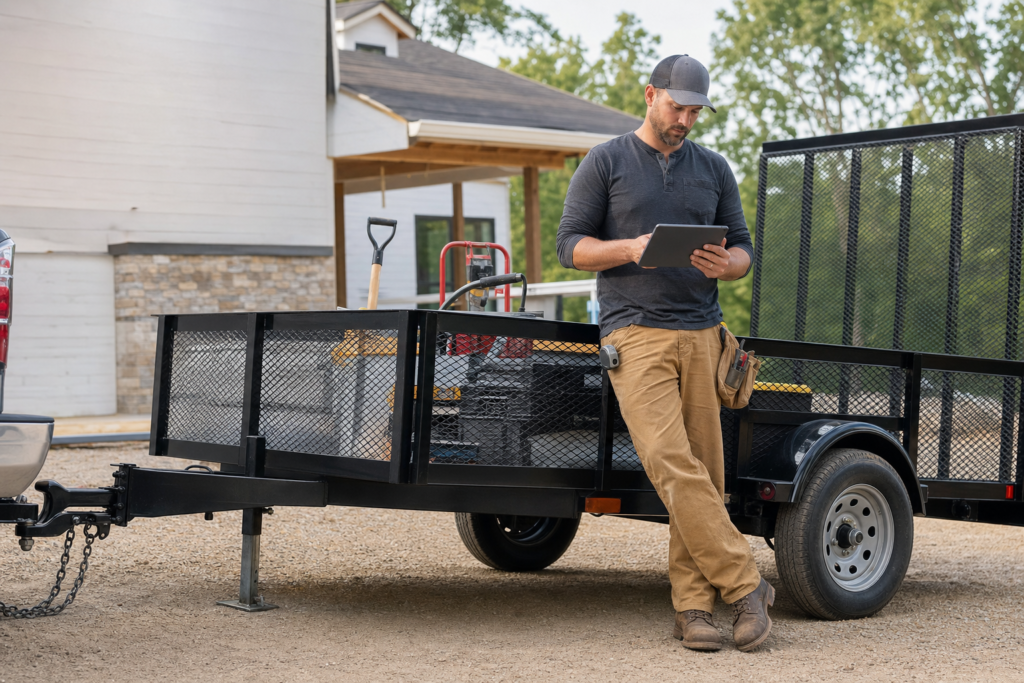
Contractors, landscapers, and mobile tradespeople usually buy equipment for a reason. A new trailer may carry a skid steer, a mowing crew, a mobile workshop, or the tools needed for a signed job. The trouble starts when the purchase gets ahead of the work. The mistake is treating a hoped-for season as if it had already paid.
Match the purchase to signed work
Before approving an equipment purchase, identify the work that will pay for it. A signed contract creates something concrete to schedule against. A strong lead is still a reason to keep selling. They are not the same thing, and the cash plan should not treat them the same.
Write down the job, the start date, the customer payment terms, and the costs that arrive before collection. Then compare that schedule with the trailer deposit, delivery balance, registration, insurance, and any modifications. If the job pays net 30 but payroll runs every Friday, the business must carry the gap. That gap is part of the purchase price even if it does not appear on the dealer quote.
Buying equipment is not the problem. The right trailer may let a crew take work that was previously out of reach, but the purchase still needs a cash story. The story should include who pays, when they pay, and what happens if the job starts late.
Deposits are working capital, with strings attached
Many trades collect a deposit before mobilizing. That money can help fund materials or setup, but it belongs to a job. Track it separately from general spending so the owner can see what is committed. Using a project deposit to cover an unrelated shortfall can make one week look healthy and the next job impossible to start.
Setup costs are easy to miss. A trailer may need racks, tie-downs, a ramp adjustment, electrical work, decals, shelving, or a different hitch. None of those items is surprising once listed. They become a problem when the owner buys the base unit and discovers that the work cannot begin until several add-ons are paid for.
Build a pre-start checklist that ends with a cash date. What must be paid before the first day on site? What can wait until the first progress payment? Which costs repeat on every job? This keeps an equipment decision connected to operations instead of leaving it in the excitement of the purchase.
Payroll arrives before the final invoice
A signed job can still create a cash squeeze because labor is paid while receivables are pending. Put payroll dates on the same calendar as material purchases and customer collections. If the crew needs three Fridays covered before the customer releases a payment, the owner needs that amount available or a clearly priced financing plan.
Collections deserve attention before the invoice is late. Confirm the billing contact, approval process, required photos, and paperwork before work starts. At completion, send the invoice while the work is fresh. A missing sign-off can delay payment even when the job itself went well.
When a customer asks for extra work, put the price and payment treatment in writing. Scope changes consume labor and fuel. If the paperwork trails behind the work, the business may fund an expansion that the customer never agreed to pay for.
Use a short forecast before saying yes
A 13-week view is often enough to expose the pressure. Start with the bank balance, add only collections with a credible date, and subtract payroll, taxes, vendor bills, debt payments, insurance, and the proposed equipment costs. Run a second version with the job delayed and a third with collection arriving later than promised.
The forecast is not a verdict. It is a way to choose a safer sequence. You might take a deposit before ordering a custom build, rent equipment for the first phase, or schedule delivery after a progress payment clears. Those choices protect flexibility while you learn whether the work repeats.
For a plain explanation of the terminology, this educational cash flow breakdown explains the foundation. Use this cash flow calculator when the owner needs to put purchase dates and collections on paper. The worksheet helps, but the contract and bank account get the final say.
Let the job carry the equipment
The Entrepreneur article on cash flow strategy reinforces a lesson that applies far beyond retail: a good business idea can be hurt by poor timing. For field service companies, matching equipment purchases to signed work keeps the decision honest. Include deposits, payroll, setup, and collections, then test what happens when the customer pays late. The trailer should help deliver profitable work, not become the reason the crew misses Friday’s payroll.